FlashField: Bridging Science and Society
FlashField empowers anyone to be a citizen scientist. Explore how this open-source platform bridges the gap between public curiosity and scientific research.
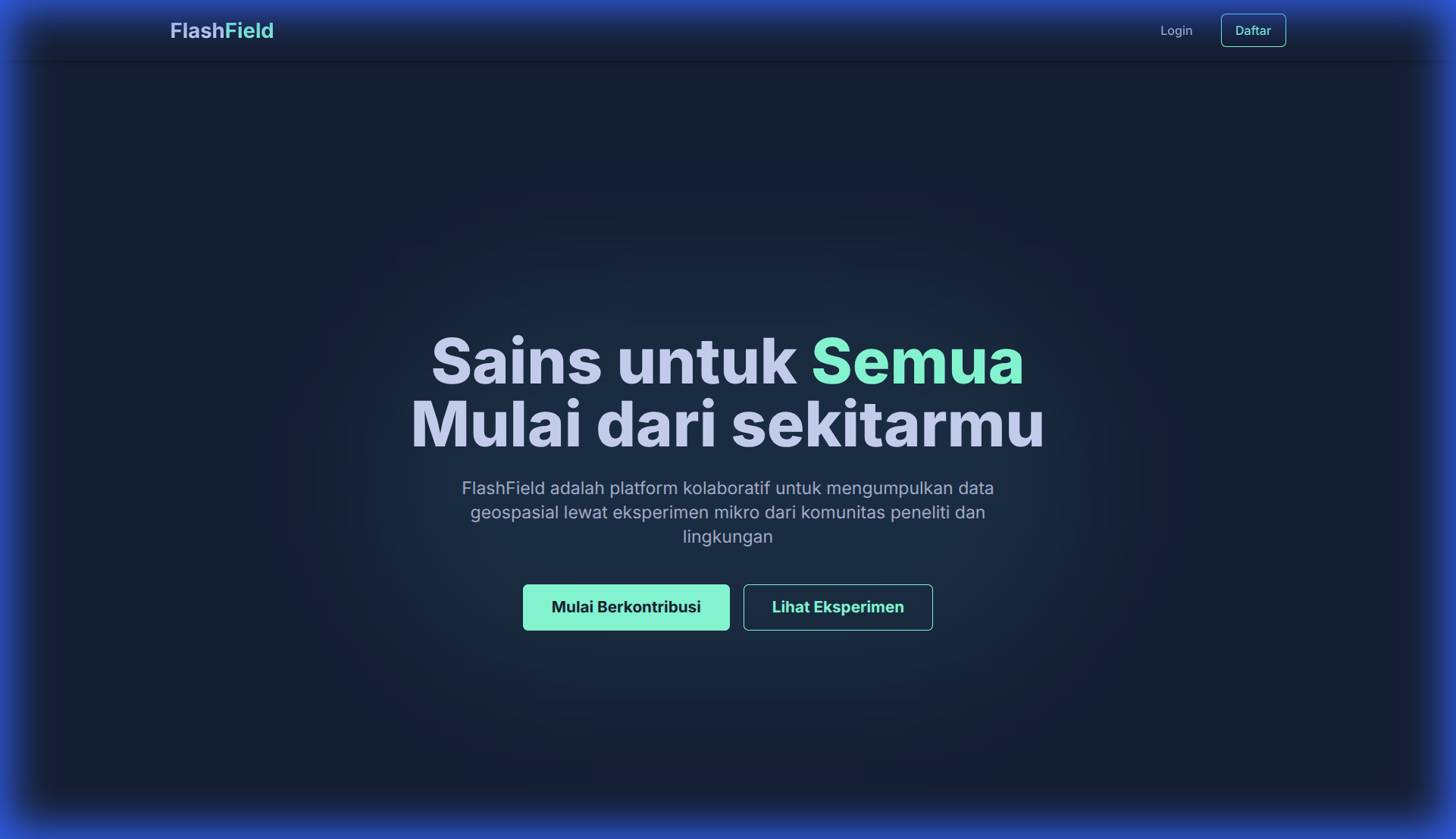
📖 Introduction: A Vision for Citizen Science
In an era where data is the new gold, FlashField emerges as a bridge connecting public curiosity with scientific rigor. This project was born from a simple yet powerful idea: what if anyone, anywhere, could become a contributor to major scientific discoveries?
FlashField is not just a data collection app; it is a Citizen Science ecosystem that empowers ordinary individuals to become “citizen scientists,” helping researchers gather micro-data from various geographic locations that are difficult for conventional research teams to reach.
🌍 The FlashField Ecosystem
FlashField is designed as a collaborative stage for three main pillars:
1. Researcher (The Experiment Architect)
For researchers, FlashField is a canvas without borders. They are no longer bound by logistical limitations to go into the field alone. Through an intuitive dashboard, researchers can:
- Design Experiments: Create new case studies with specific parameters.
- Limitless Configuration: Use the Dynamic Input Fields system to define exactly what data is needed - whether it’s air temperature, photos of environmental conditions, or noise levels.
- Data Visualization: View incoming data in real-time in the form of heatmaps and statistical charts, turning raw numbers into meaningful insights.
2. Volunteer (Eyes and Ears on the Ground)
Volunteers are the heartbeat of FlashField. Equipped with their mobile devices, volunteers explore the real world to:
- Find Missions: Choose experiments that interest them in their vicinity.
- Make Real Contributions: Submit observational data complete with accurate GPS coordinates. Every submission is a valuable piece of the puzzle for science.
- See the Impact: Track their contribution history and see how their data helps shape researchers’ understanding.
3. Administrator (The Ecosystem Guardian)
Behind the scenes, Admins ensure the ecosystem wheels turn smoothly. They manage user integrity, monitor platform activity, and guarantee that FlashField remains a safe and productive space for scientific collaboration.
🛤️ The Data Journey
Imagine a climate researcher wants to map micro-temperature changes in a city. On FlashField, this journey begins with Experiment Initiation, where the researcher sets the parameters: “Temperature,” “Humidity,” and “Sky Photo.”
Instantly, this experiment comes ‘alive’ in the feeds of Volunteers. A student in the suburbs sees a notification, opens the app, and makes an observation. They input 32°C, snap a photo of the clear sky, and hit “Send.”
In seconds, that data flies to the server, is processed, and appears as a new red dot on the researcher’s map. This dot, along with thousands of others, slowly forms a pattern - a story about the city’s climate that could not be told without the help of citizens.
🏗️ A Symphony of Technology (Under the Hood)
Although users see only an elegant interface, FlashField is powered by a robust orchestration of modern technologies:
- Fast and Secure Foundation: On the backend, FastAPI (Python) works as a high-speed engine handling thousands of data requests with minimal latency. Data security is tightly guarded by reliable PostgreSQL, ensuring every bit of information is stored safely.
- Seamless Interactivity: The frontend is built with React 18 and Vite, creating a smooth and responsive user experience. Page transitions feel instant, as if the app already knows what you want to do next.
- Spatial Intelligence: Integration with Leaflet provides interactive mapping capabilities, allowing for rich and informative geographic visualization.
- Adaptive Design: Wrapped in TailwindCSS, FlashField’s interface remains stunning and functional, whether on a researcher’s laptop screen or a volunteer’s mobile phone in the field.
🚀 Future Roadmap
The vision for FlashField does not stop here. Strategic steps have been prepared to take this platform to the next level:
Phase 1: Enhanced Interaction (Q3 2025)
- Gamification: Adding badges and leaderboards systems to motivate volunteers to contribute more actively.
- Real-time Notifications: Alerting volunteers when there are new experiments within their location radius.
Phase 2: Intelligent Analysis (Q4 2025)
- AI Validation: Using Machine Learning to automatically verify photos or data submitted by volunteers (e.g., detecting if a “sky photo” is actually a photo of a wall).
- Advanced Data Export: Allowing researchers to download data in analysis-ready formats (CSV, GIS formats) with complex filters.
Phase 3: Open Ecosystem (2026)
- Public API: Opening access to (permitted) data for other developers to build applications on top of FlashField data.
- Offline Mode: Allowing volunteers to collect data in remote areas without internet, and syncing it when back online.
FlashField is proof that science belongs not just in closed laboratories. It exists on the streets, in city parks, and in our own backyards. And now, the tool to uncover it is in your hands.
🔗 Get Involved
FlashField is an open-source project. We welcome contributions, bug reports, and feature suggestions from the community.
Explore the Codebase: https://github.com/abijaksana96/FlashField